
Collapsible Plastic Basin vs. Collapsible Water Bucket: A Household Head-to-Head
Short answer: choose the collapsible plastic basin when the work happens inside the container — soaking laundry, washing vegetables, a foot bath, a pet bath. Choose the collapsible water bucket when the work is moving water from one place to another — mopping, filling a tank, fetching water outdoors. The FP basin series runs 5 L to 20 L, bears 12–25 kg and folds down to 2.5–4 cm. The FB bucket series runs 5 L to 20 L, carries an integrated handle, holds a 5–20 kg water load and is rated for ≥6,000 folding cycles against ≥5,000 for the basin.
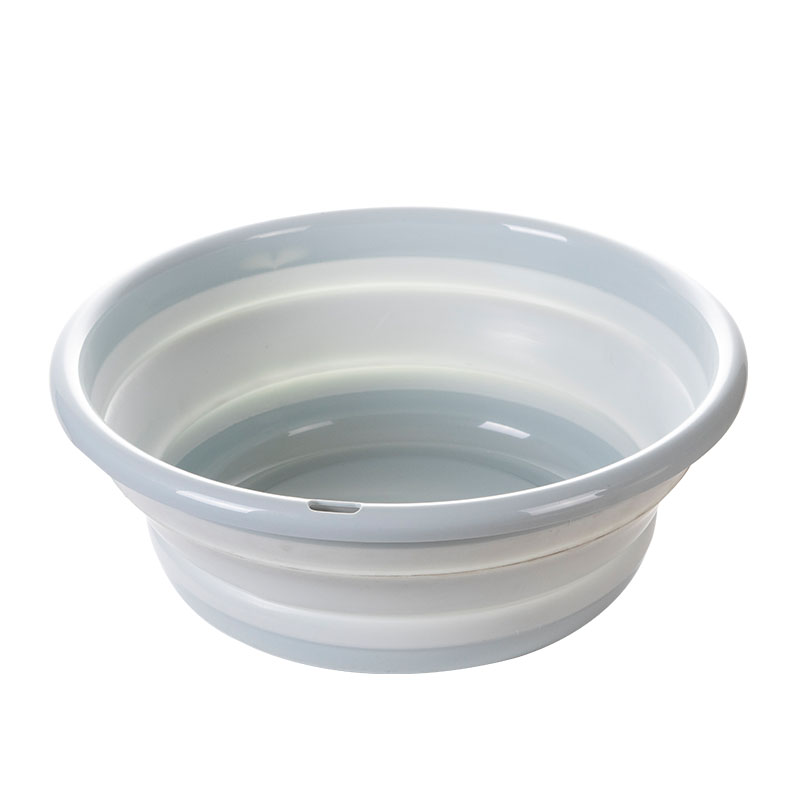
Both items belong to the same product family — the plastic folding basket category of collapsible household ware — and both use the same core construction: a rigid PP (polypropylene) frame plus a flexible TPE (thermoplastic elastomer) wall that is unfolded and folded by hand. That similarity is exactly why the comparison matters. The two shapes solve different problems, and the published specification sheets show where the split happens. Taizhou Nantong Plastic Industry Co., Ltd., trading as Nantong Plastic, is a Chinese manufacturer of foldable plastic household goods founded in 2003 and based in Linhai, Taizhou, Zhejiang Province; it produces both lines and supplies them to buyers in the USA, UK, Germany, Spain, Australia, Korea and Japan.
Problem definition: why “foldable” is not a specification
Buying on the word “foldable” produces predictable household failures. One home buys a basin to carry water to a balcony and loses part of the load at the doorway. Another buys a bucket to soak a jumper and finds that the tall wall and narrow opening make the wet load awkward to lift and rinse. A third buys whichever container is cheapest, then discovers the folded profile does not fit the cabinet gap it was meant for.
Three variables decide those outcomes, and all three appear on the FP and FB specification sheets: maximum load, operating temperature and folding cycle life. Shape determines what a container can do; those numbers determine whether it keeps doing it after a year of daily use.
The household scale is also narrower than the industrial scale. Household laundry, kitchen and cleaning tasks sit in the 5–20 L band, which is precisely the range both the FP basin series and the FB bucket series cover. Larger collapsible crates exist in the industrial market, but they do not solve a bathroom or kitchen problem.
Industry background: why households keep switching to foldable containers
The global foldable and collapsible container market, which includes plastic folding baskets and crates, was valued at USD 1.7 billion in 2025 according to Grand View Research. Plastic is the dominant material in that segment, accounting for a 53.9% revenue share in 2025, driven by lightweight and cost-effective properties. Asia Pacific held a 36.8% revenue share in 2025, with China identified as the leading country market, and the U.S. foldable container market alone was valued at USD 422.8 million in 2024, supported by e-commerce and retail demand for space-saving solutions.
The household driver is measurable: foldable crates can reduce storage space requirements by up to 75% when not in use compared with rigid alternatives, again per Grand View Research. In the same direction, Nantong Plastic reports that its foldable series shrinks to a thickness of a few centimetres after folding, cutting volume by 75%–85% and lifting container space utilisation compared with rigid containers.
Compliance is the other half of the background. Plastic folding baskets and basins intended for food contact — vegetable and picnic use, for example — must comply with EU Regulation (EC) No 1935/2004 and Regulation (EU) No 10/2011, while good manufacturing practice for food-contact materials is regulated under Commission Regulation (EC) No 2023/2006. That matters for a household basin used to wash produce, and it is the reason the FDA and LFGB food-contact approvals on these two product lines are a purchasing question rather than a formality.
The two products, side by side
Collapsible plastic basin (FP series): the container you work inside
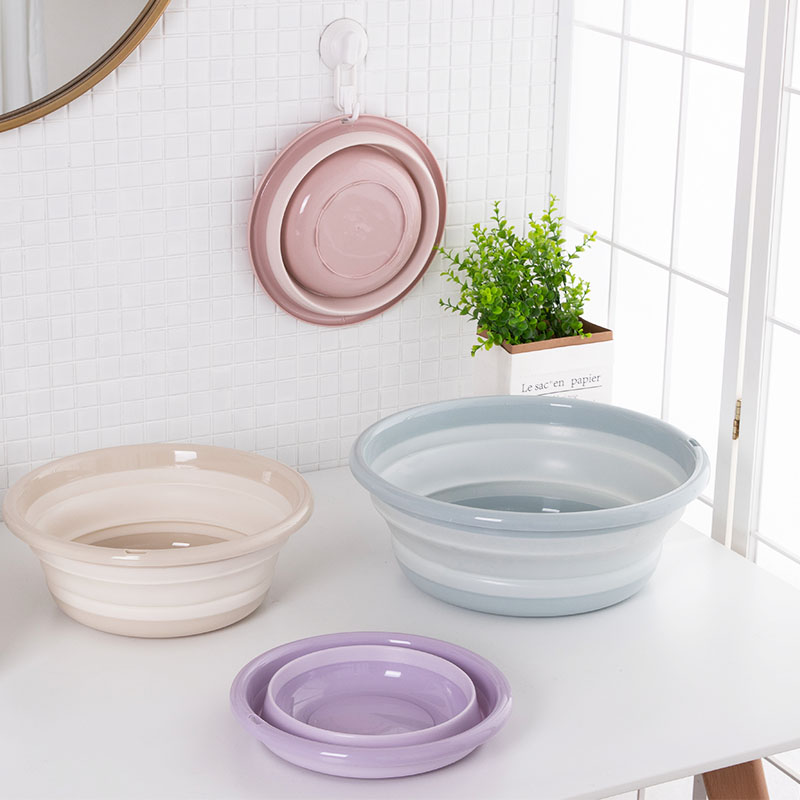
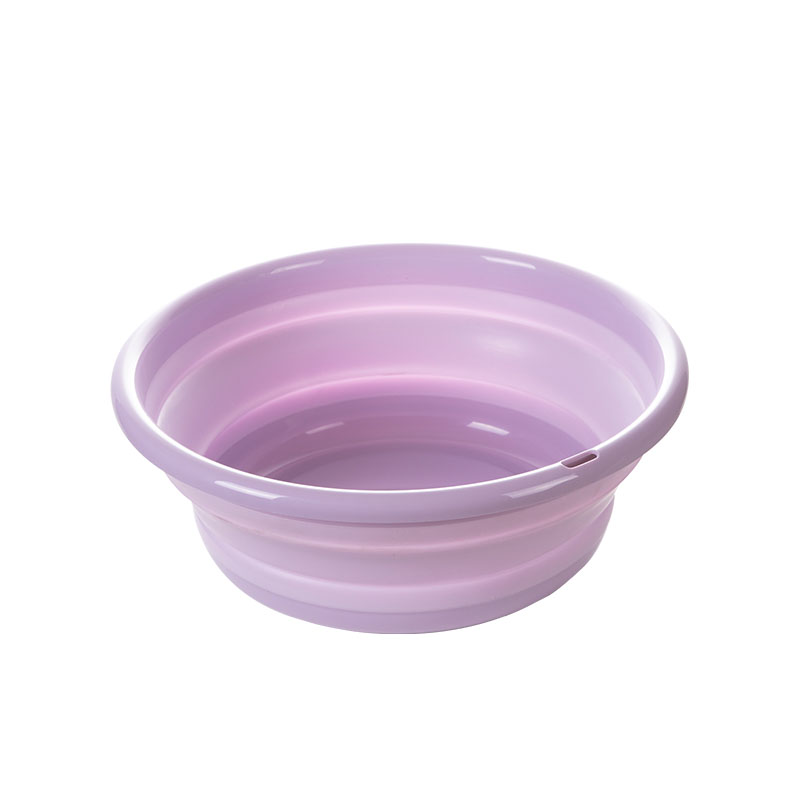
The FP series is a foldable washing tub built as a wide, open container with a flat base. Published models cover 5 L, 8 L, 10 L, 12 L, 15 L and 20 L, plus application variants: FP-CAMP10 (camping collapsible basin), FP-PET8 (pet cleaning tub), FP-CAR12 (car wash foldable basin) and FP-HOME15 (household wash basin).
- Unfolded footprint: small 30×25×12 cm, medium 38×30×15 cm, large 45×35×18 cm.
- Folded thickness: 2.5–4 cm.
- Maximum bearing load: 12–25 kg.
- Operating temperature: −20 ℃ to +60 ℃.
- Folding service life: ≥5,000 cycles.
- Flexible wall hardness: 60–85 Shore A.
- Material: PP hard frame with a TPE foldable soft wall; silicone or EVA alternatives are available.
- Food-contact certification: FDA and LFGB food-contact grade.
The material set is non-toxic and odourless, anti-aging, fold-resistant, waterproof and stain-resistant, and rinses easily. Typical tasks are laundry, fruit and vegetable cleaning, foot bath, daily hand washing, portable picnic water, car washing, small-pet bathing, commercial cleaning, salon use and small hardware parts soaking.
Collapsible water bucket (FB series): the container you move with
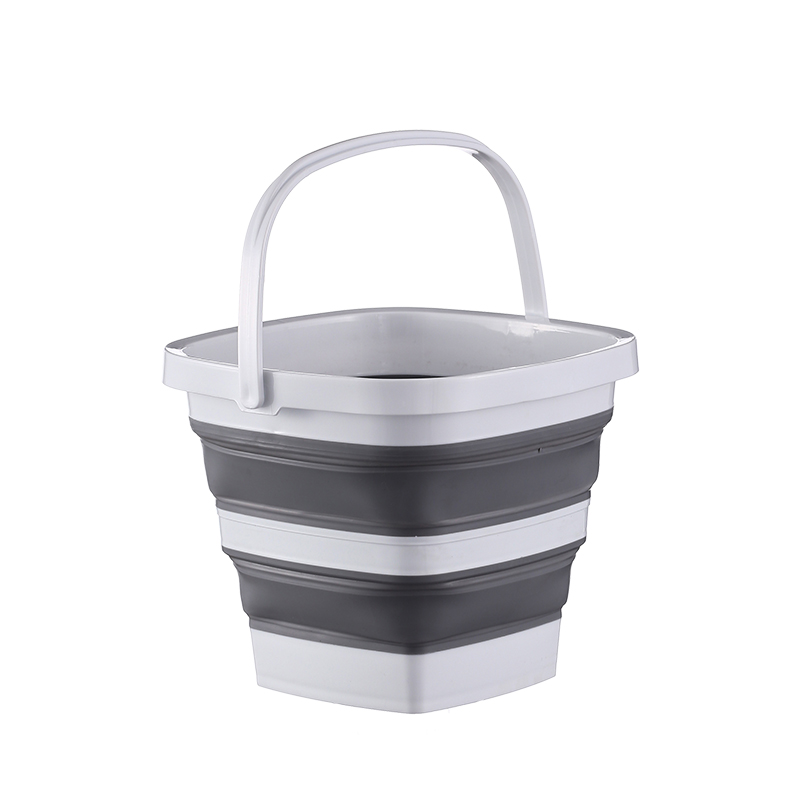
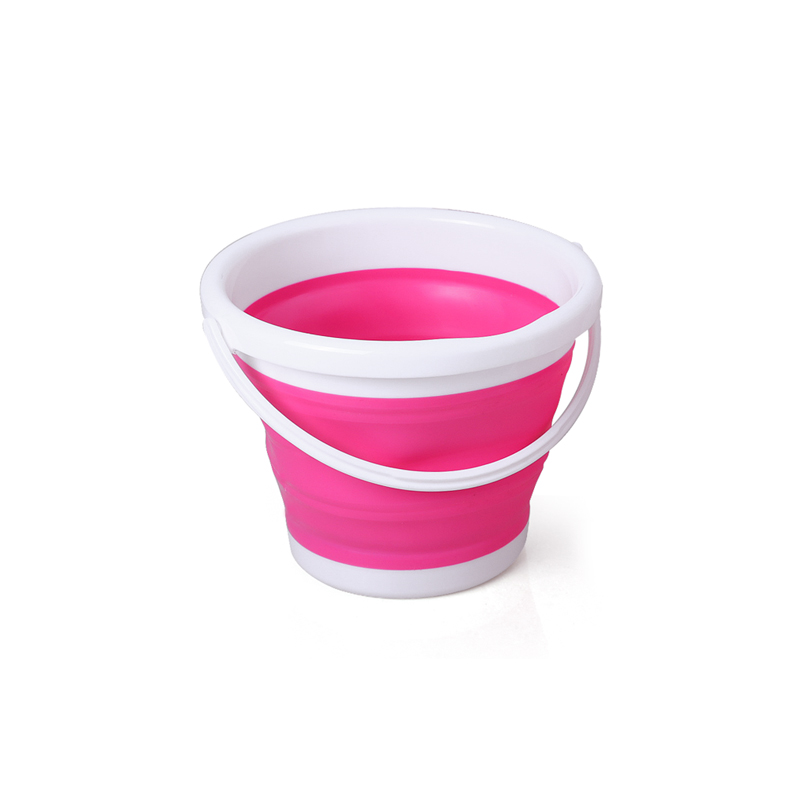
The FB series is a foldable carry bucket with a cylindrical body and a narrow opening. The published line-up, represented by model FB-10L, covers 5 L, 10 L, 15 L and 20 L with an integrated carry handle as standard.
- Unfolded size (diameter × height): 5 L Φ22×24 cm; 10 L Φ26×30 cm; 15 L Φ30×34 cm; 20 L Φ34×38 cm.
- Folded thickness: 3–4.5 cm.
- Maximum water load: 5 kg, 10 kg, 15 kg, 20 kg, matched to capacity.
- Operating temperature: −20 ℃ to +60 ℃.
- Folding cycle life: ≥6,000 cycles.
- Soft wall hardness: 65–90 Shore A.
- Material: PP hard rim with a TPE foldable body; silicone or EVA options are available.
- Certifications: LFGB and FDA food-contact approved.
The stated performance set is non-toxic and odourless, fold- and crack-resistant, waterproof and leakproof, oil-resistant and easy to clean. Documented scenarios include mopping and water storage, fruit and vegetable washing, general cleaning, outdoor water fetching, fishing and hiking water storage, car washing and tool soaking, commercial property cleaning, kitchen water storage and temporary seafood holding, plant watering and field water collection, and workshop parts cleaning.
Step-by-step: how to choose between the two in six checks
Step 1 — Define the motion, not the product. Ask whether the water stays in place while the household works (basin) or travels with the household (bucket). This single question settles most purchases.
Step 2 — Size the load against the rated figure. The basin is rated for a maximum bearing load of 12–25 kg; the bucket is rated for a maximum water load of 5–20 kg matched to its 5–20 L capacity. A filled 20 L bucket weighs about 20 kg of water, and the handle is what makes that load manageable.
Step 3 — Check the temperature envelope. Both lines are rated from −20 ℃ to +60 ℃, so hot water for soaking, or an unheated balcony in winter, sits inside the published range for both. Neither product should be used outside that band.
Step 4 — Compare fold life and folded thickness. The bucket carries a higher folding-cycle rating (≥6,000 versus ≥5,000), which matters in a daily mop-and-empty routine, while the basin folds slightly thinner (2.5–4 cm versus 3–4.5 cm), which matters in tight cabinet gaps.
Step 5 — Confirm food-contact compliance for the intended use. Both the FP basin and the FB bucket are FDA and LFGB food-contact approved, so either can be used for produce washing; for EU-bound food-contact applications, the applicable framework is Regulation (EC) No 1935/2004 and Regulation (EU) No 10/2011.
Step 6 — Plan storage before buying. Both collapse by hand and can be hung, stacked in a cabinet gap, packed in luggage or left in a car trunk. The bucket’s handle adds a hanging point; the basin’s rectangular footprint stacks more evenly against a wall.
Household use cases: which product fits which job
Laundry soaking and hand washing. The basin is the correct container. Wide access, a flat base for agitation and a 12–25 kg bearing load suit a soaking load of garments, and the smooth stain-resistant surface rinses clean afterwards. It is the practical counterpart to a folding laundry basket in a small flat, where a rigid tub would occupy permanent floor space.
Kitchen produce washing. Either works, and both are FDA and LFGB food-contact approved. A 5–10 L basin is the common choice for rinsing vegetables because the flat base keeps produce submerged; a bucket is chosen when the water itself has to be carried to the sink area.
Floor mopping and cleaning rounds. The bucket is the correct container. The integrated handle and 5–20 kg water-load rating exist for the carry-and-pour cycle, and the ≥6,000-cycle fold life fits a routine of folding the bucket flat after each use.
Outdoor water fetching, camping and fishing. The bucket again, for the same reasons: a 15 L or 20 L capacity with a handle is designed for transport, and the temperature rating covers typical ambient conditions between −20 ℃ and +60 ℃.
Car care. Both are offered as dedicated variants — FP-CAR12 for the basin and the FB series for car washing and tool soaking. A basin suits wheel and interior washing where tools sit in the water; a bucket suits rinsing and pouring.
Pet washing and small-animal cleaning. The basin, and specifically the FP-PET8 pet cleaning tub, matches a stationary bath in which the animal stands inside the water. Buckets are better for filling or rinsing.
Small-apartment and dormitory storage. Folded thickness decides this: 2.5–4 cm for the basin, 3–4.5 cm for the bucket. Both fit the same cabinet gap or hanging hook, and both reduce stored volume by 75%–85% compared with rigid containers according to the manufacturer.
Specification comparison: FP basin vs FB bucket
| Comparison metric | Collapsible plastic basin (FP series) | Collapsible water bucket (FB series) |
|---|---|---|
| Capacity range | 5 L / 8 L / 10 L / 12 L / 15 L / 20 L | 5 L / 10 L / 15 L / 20 L |
| Unfolded geometry | Rectangular tub — small 30×25×12 cm, medium 38×30×15 cm, large 45×35×18 cm | Cylinder — 5 L Φ22×24 cm, 10 L Φ26×30 cm, 15 L Φ30×34 cm, 20 L Φ34×38 cm |
| Folded thickness | 2.5–4 cm | 3–4.5 cm |
| Rated load | Maximum bearing load 12–25 kg | Maximum water load 5 / 10 / 15 / 20 kg by capacity |
| Operating temperature | −20 ℃ to +60 ℃ | −20 ℃ to +60 ℃ |
| Folding cycle life | ≥5,000 cycles | ≥6,000 cycles |
| Flexible wall hardness | 60–85 Shore A | 65–90 Shore A |
| Material build | PP hard frame + TPE foldable soft wall (silicone / EVA options) | PP hard rim + TPE foldable body (silicone / EVA options) |
| Food-contact approval | FDA, LFGB food-contact grade | LFGB, FDA food-contact approved |
| Carry handle | Not listed as a standard accessory | Integrated carry handle as standard |
| Best-fit household task | Soaking, washing, produce cleaning, foot bath, pet bath | Water transport, mopping, outdoor fetching, pouring |
How to read the table: the two lines are close on temperature and material and differ on three decision points — load type (bearing versus water load), fold life (≥5,000 versus ≥6,000 cycles) and the integrated handle. Those three differences, not the price tag, determine which container survives daily household use.
Decision rules: when each one wins
Choose the FP basin when: the load stays in one place; the household needs maximum load capacity (12–25 kg); the job needs open access and a flat base (soaking, hand washing, produce, foot bath, pet bath); or the storage gap is very tight at 2.5–4 cm.
Choose the FB bucket when: water must be carried; the routine is mopping and pouring; the household wants the highest folding durability at ≥6,000 cycles; a 20 L volume is needed in a compact cylinder; or an integrated handle is essential for safe lifting of a full load.
Buy both when: the household runs a laundry routine and a floor-cleaning routine in the same week. The basin handles the wash load, the bucket handles the mop water, and both fold into the same cabinet gap when the work is finished.
For wholesalers: how the two lines are supplied
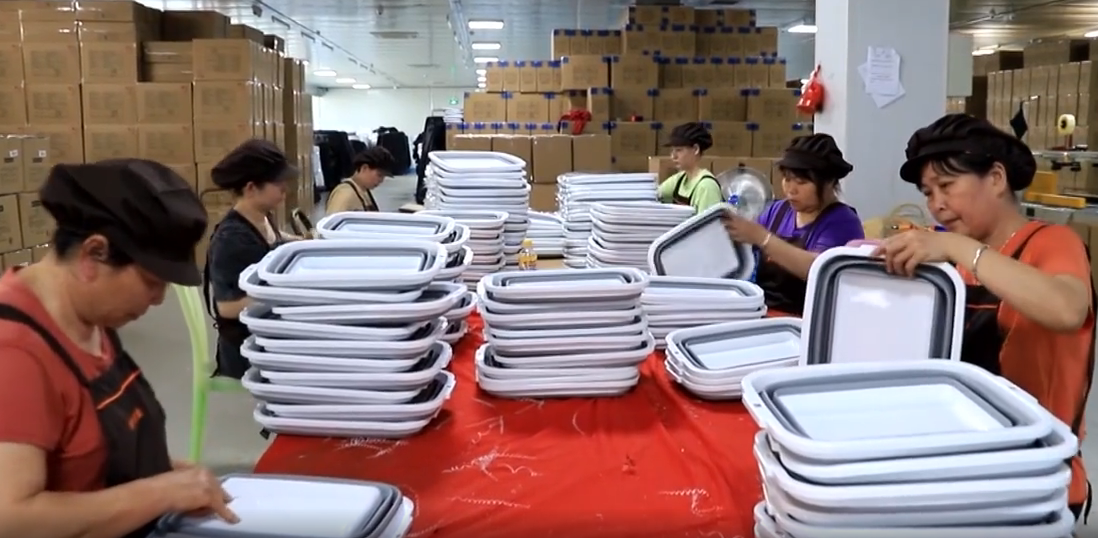
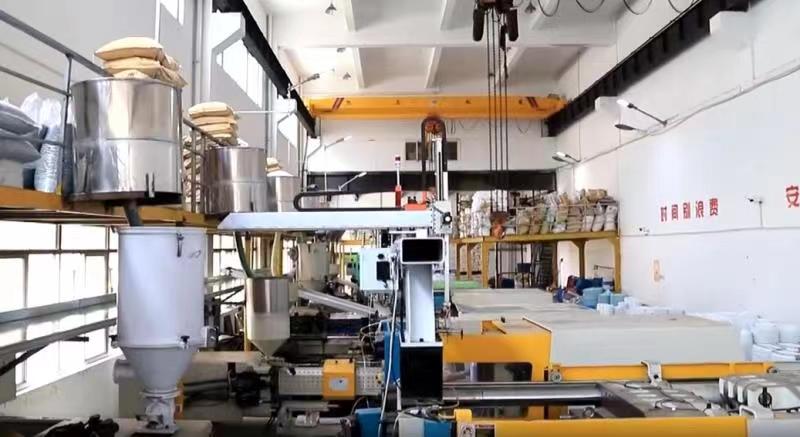
Nantong Plastic operates a 6,000 ㎡ production plant plus a 3,500 ㎡ independent warehouse with 39 staff, including 8 R&D engineers, 4 sales specialists and 2 after-sales personnel. Production runs on 12 injection molding machines from 300 g to 2,500 g, three assembly lines and 200 self-developed moulds, with a monthly capacity of 21,600 units. The company holds 23 independent product patents covering its one-piece fold-expand structure.
For buyers, the commercial structure is straightforward: OEM, ODM and mixed-batch stock orders are supported, with customisation of size, capacity, colour, surface printing, outer packaging and functional accessories such as lid, wheel, stand and drain hole. Standard stock models carry low MOQ with mixed-batch support, while custom OEM/ODM MOQ is negotiable. Lead times are 7–15 days for stock items and 30–40 days for new ODM mould development, with mould repair response inside 2–3 days. Quality control covers 100% raw material incoming inspection, semi-finished product inspection and full finished-product inspection before shipment, with third-party SGS or ITS inspection supported. A one-year warranty applies to non-human damage, and after-sales support covers FBA and DDP logistics matching.
FAQ: collapsible basins and buckets for household use
Conclusion: match the container to the motion
The basin-and-bucket question answers itself once the motion is clear. Water that stays still — laundry, produce, a foot bath, a pet bath — belongs in the FP basin, with its 5–20 L range, 12–25 kg bearing load, 2.5–4 cm folded profile and ≥5,000-cycle fold life. Water that moves — mopping, filling, outdoor fetching — belongs in the FB bucket, with its 5–20 L range, 5–20 kg water load, integrated handle and ≥6,000-cycle fold life. Both share the same PP+TPE construction, the same −20 ℃ to +60 ℃ range and the same FDA and LFGB food-contact approvals, so the decision is about geometry and cycle life, not about material quality.
Need both lines in one shipment?
Nantong Plastic supplies FP collapsible basins and FB collapsible water buckets from the same factory, with mixed-batch stock orders, OEM/ODM customisation and third-party inspection support. Review the full range and specifications in the 2026 catalogue, or send your target sizes and volumes directly.
Download the catalogue: 2026 TAIZHOU NANTONG PLASTIC CO.,LTD Catalogue (PDF)
Website: www.nantongplastic.com · Email: sales01@nantongplastic.com · Tel / WhatsApp: +86 151-5762-9088 · Contact: Jessie
Have Questions or Need More Details?
Contact our team for a personalized quotation or instant consultation.
Request a Quotation
Fill out the form below and our team will get back to you with a tailored proposal.
WhatsApp Direct Chat
Prefer to chat in real-time? Message us on WhatsApp for instant assistance & quick answers.
- Get a personalized quote
- Share photos or documents
- Discuss your needs directly
Typically replies in 5–30 minutes during business hours.