Supplier Evaluation: How to Audit a Foldable Plastic Basket Factory with 200 Molds
A factory audit for folding plastic baskets should settle three questions before price is negotiated: who owns the molds, what the injection equipment can physically produce, and whether the compliance documents are current. A supplier that claims 200 molds must be able to hand over a dated mold list, walk a buyer through the tooling, and demonstrate the machines that run it. Taizhou Nantong Plastic Industry Co., Ltd. — trading as Nantong Plastic, a foldable plastic household goods manufacturer founded in 2003 in Taizhou, Zhejiang, China — is used throughout this guide as a reference case for what verifiable answers look like.
This audit framework is written for importers, Amazon FBA private-label brand owners, retail sourcing teams and regional distributors who are already in the evaluation stage and need to separate a genuine mold-owning factory from a trading intermediary. The guide covers the four audit pillars (mold ownership, OEM customization, composite injection capability, and documentation stability), an eight-step audit sequence that can be completed in one working day, the buyer scenarios where each check matters most, and a comparison table of weak answers versus verifiable evidence.
Problem Definition: Why Mold Count Is the Most Misused Number in Supplier Evaluation
Mold count is popular in supplier marketing because it sounds like a proxy for capability, but on its own it proves nothing. A trading company can quote "200 molds" that belong to a third-party tooling workshop it has no control over, and a factory can count molds that are worn out, retired, or built for products it no longer sells. The audit question is therefore not how many molds exist, but which molds are owned, which are production-ready, and how fast a tooling problem can be resolved without delaying a repeat order.
The second problem is that audit requests usually receive adjectives instead of documents. Buyers asking about customization hear "we support any size and color"; buyers asking about material safety hear "food grade". Neither answer is falsifiable. A foldable basket is a composite part — a rigid PP frame bonded to a soft TPE fold wall — so the failure modes that matter (fold-line cracking, seam leakage, wall-thickness variation, odor under hot water) can only be assessed against tooling records, machine specifications and test documentation.
The three failure points that a mold-count claim hides:
- Tooling ownership: the molds are subcontracted, so new-size development and repair timelines are outside the supplier's control.
- Tooling condition: molds exist but are not maintained, producing uneven fold lines and inconsistent wall thickness across a batch.
- Tooling relevance: the mold list does not match the quoted SKUs, meaning the quoted folding laundry basket or folding picnic basket is sourced elsewhere.
Industry Background: Why Supplier Verification Is Being Pushed Harder
The commercial case for auditing foldable suppliers is strengthening. Grand View Research valued the global foldable and collapsible container market, which includes plastic folding baskets and crates, at USD 1.7 billion in 2025, with plastic holding a 53.9% revenue share of the segment that year because of its lightweight and cost-effective properties. The same source places Asia Pacific at a 36.8% revenue share in 2025, with China identified as the leading country market — which is why so much of the evaluation work happens in Chinese supply clusters.
Trade data tells a similar story. Global trade in plastic boxes, cases and crates under HS Code 392310 reached approximately USD 14 billion in 2024, according to the Observatory of Economic Complexity, and China's exports within that code were valued at USD 1.89 billion in 2024. On the demand side, Grand View Research estimated the U.S. market for foldable containers at USD 422.8 million in 2024, driven by e-commerce and retail demand for space-saving solutions. Fortune Business Insights projects the plastic crates market to reach approximately USD 7.56 billion by 2034, growing at a CAGR of 7.56% from 2026; other research firms, including Market Research Future, publish a materially lower growth estimate, so buyers should treat forecast figures as directional rather than as a planning constant.
Regulation is the other force. Plastic folding baskets used for food contact — a folding vegetable basket or folding drain basket, for example — fall under EU Regulation (EC) No 1935/2004 and Regulation (EU) No 10/2011, with good manufacturing practice obligations set out in Commission Regulation (EC) No 2023/2006. Food-contact compliance is not something a buyer can assess from a product photo, which is why documentation checking now sits at the centre of most factory audits.
It is also worth calibrating expectations on who the competitors are. Third-party market research identifies Schoeller Allibert, ORBIS Corporation and Brambles (CHEP) among the global players in the plastic container and crate market; these businesses are generally oriented toward industrial returnable transit packaging rather than household folding baskets. For household folding baskets, folding laundry baskets and folding storage baskets, sourcing usually runs through regional manufacturers such as Nantong Plastic, which is why factory-level verification, not brand recognition, determines risk.
Detailed Solution: The Four Audit Pillars of a Foldable Plastic Basket Factory
A 200-mold factory audit should be structured around four pillars. Each pillar has a specific document request and a specific physical check, so the audit does not collapse into a factory tour.
Pillar 1 — Mold ownership: verify the 200 molds as assets, not as a slogan
Nantong Plastic owns 200 self-developed production molds. The audit action is to convert that claim into a verifiable list: ask for a mold inventory that maps each tool to a product code and a moulded part, then physically verify a sample of those molds in the tooling area. A genuine mold owner can also answer two timeline questions immediately — how long a new mold takes and how fast a damaged mold is fixed. At Nantong Plastic, the standard mold opening cycle is 30–40 days and mold repair response is within 2–3 days. Those two numbers are the practical value of mold ownership: they determine whether a new size launches on schedule and whether a repeat order survives a tooling failure.
Pillar 2 — OEM customization: test size, capacity and color support with a written scope
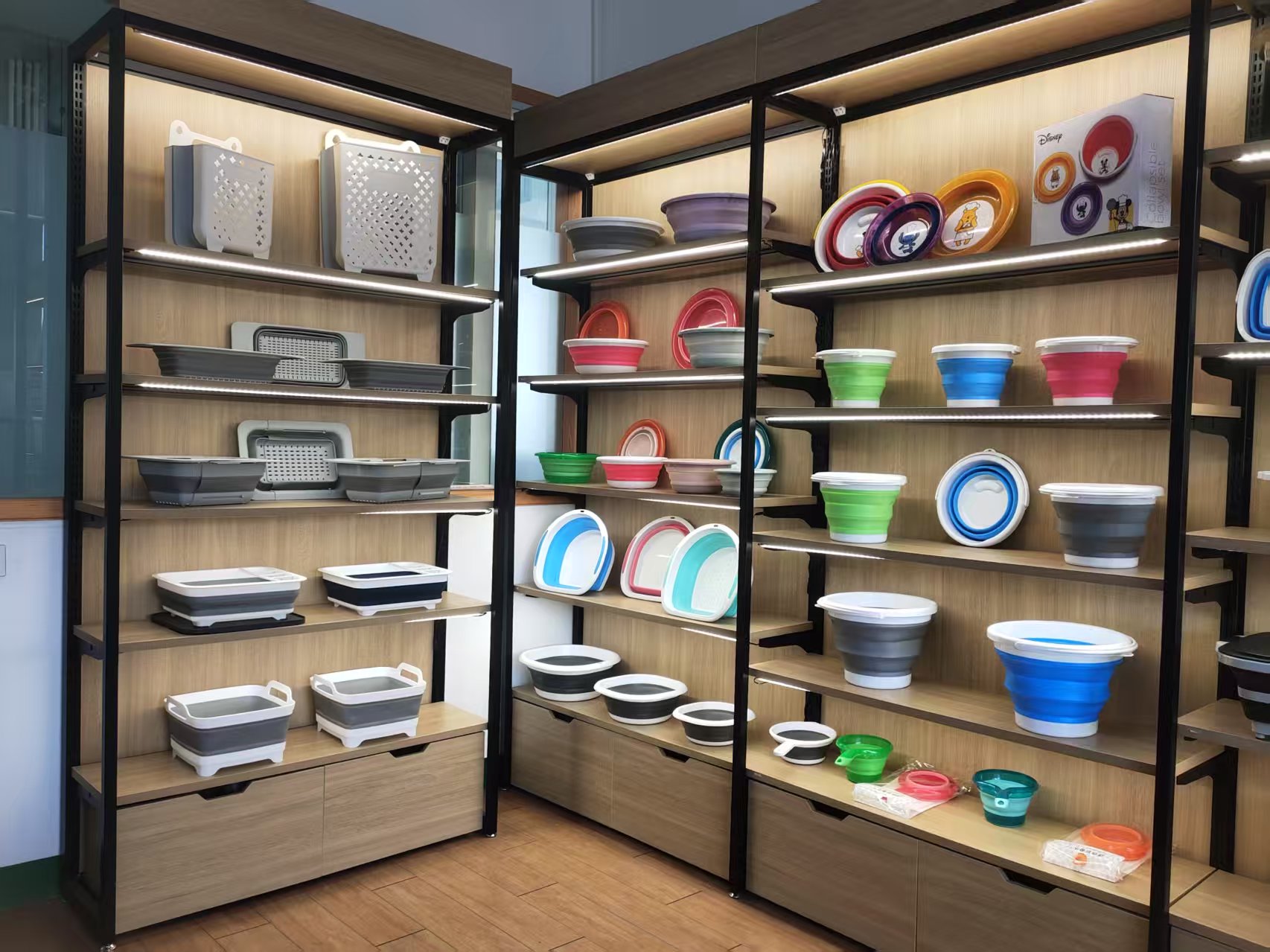
Customization claims should be audited against a written scope rather than a sample wall. Nantong Plastic supports OEM and ODM customization of product size, capacity, color, surface printing logo, outer packaging color box and label, and functional accessories including lid, wheel, stand and drain hole. The product range covers over 90 styles with capacities from 3L to 43L.
The fastest way to test this pillar is to name the SKUs you actually intend to buy and ask which mold already covers them. A retail programme that needs a folding basket with lid, a wheeled folding basket and a folding basket with stand is asking for three different tooling sets, not one product in three colours. Home and laundry ranges typically resolve to the folding laundry basket, the thickened folding basket and the large capacity folding basket; outdoor programmes resolve to the folding picnic basket and folding hand basket; grocery and kitchen programmes resolve to the folding vegetable basket, perforated hollow folding basket and folding drain basket; car-care and utility programmes resolve to the car folding basket, hanging folding basket and pull rod folding basket; general merchandising resolves to the folding storage basket, folding shopping basket, oval folding basket, square folding basket and rectangular folding basket. If the mold list cannot be mapped to those shapes and sizes, the customization claim is unverified.
Pillar 3 — Composite injection capability: verify dual-shot molding and the PP+TPE bond
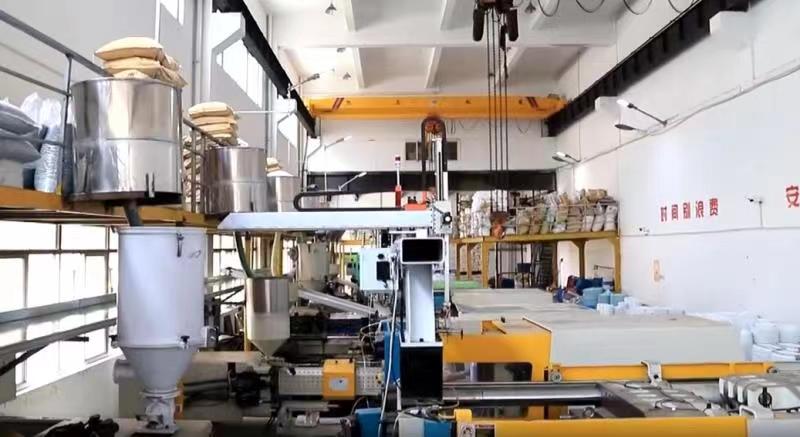
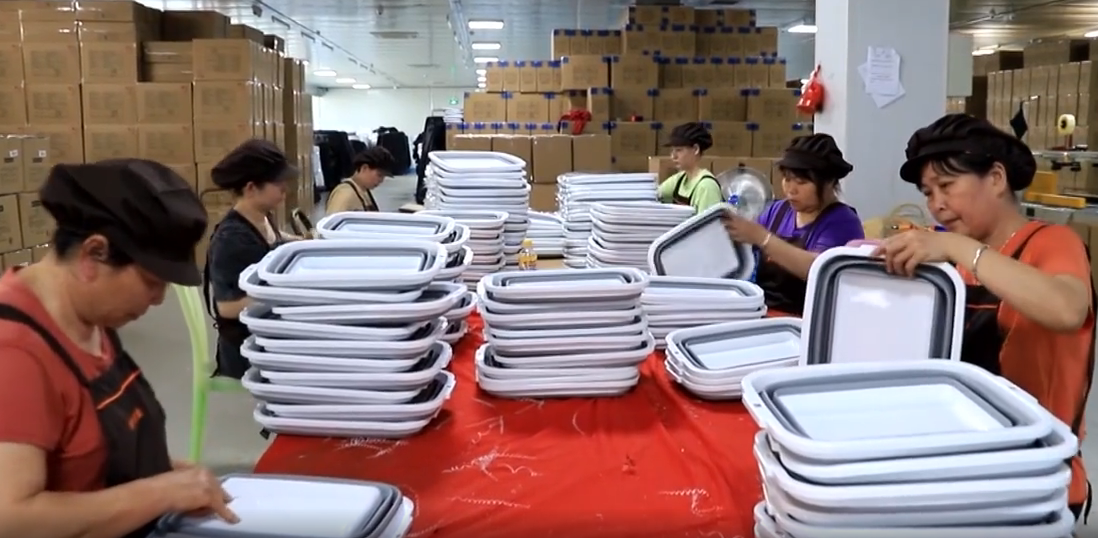
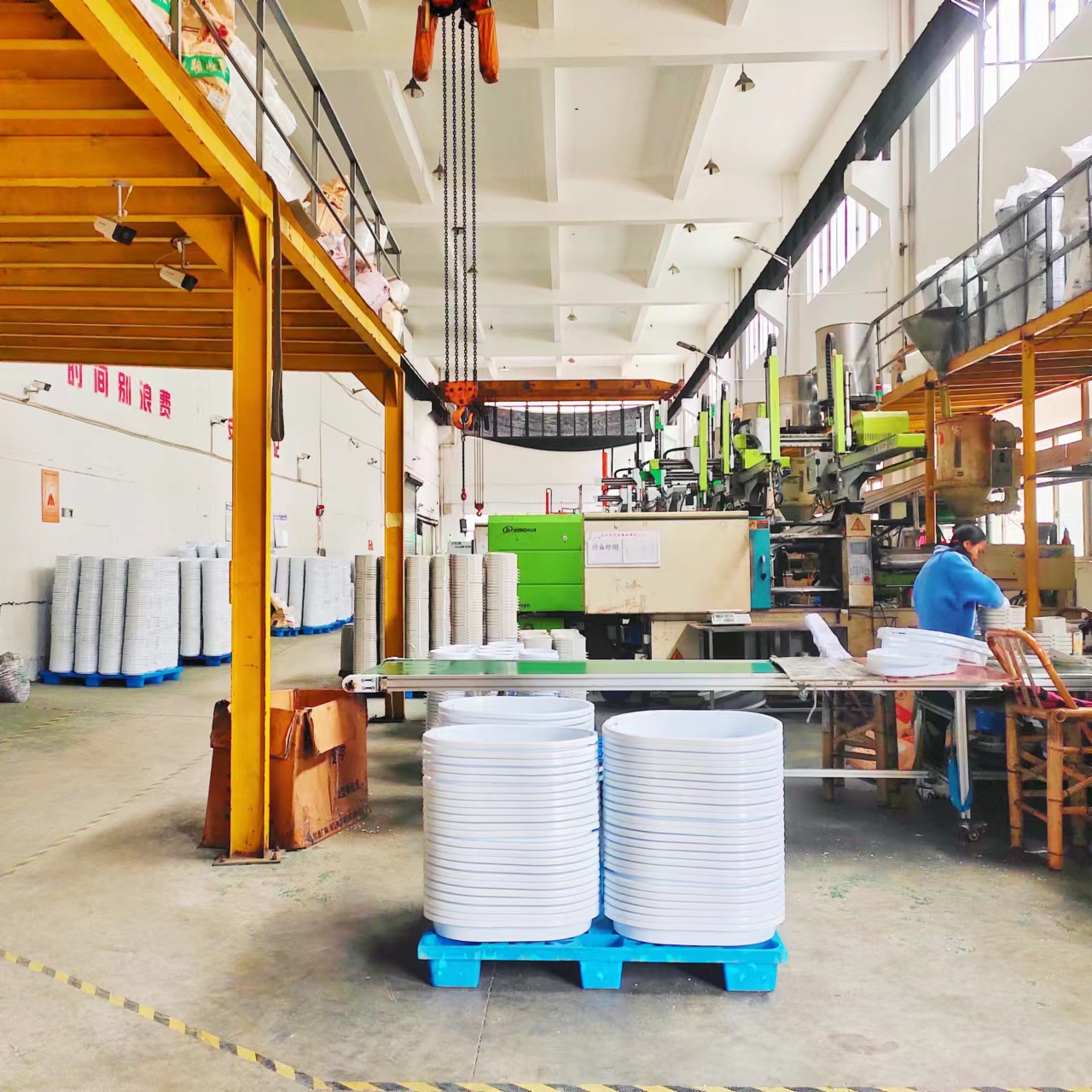
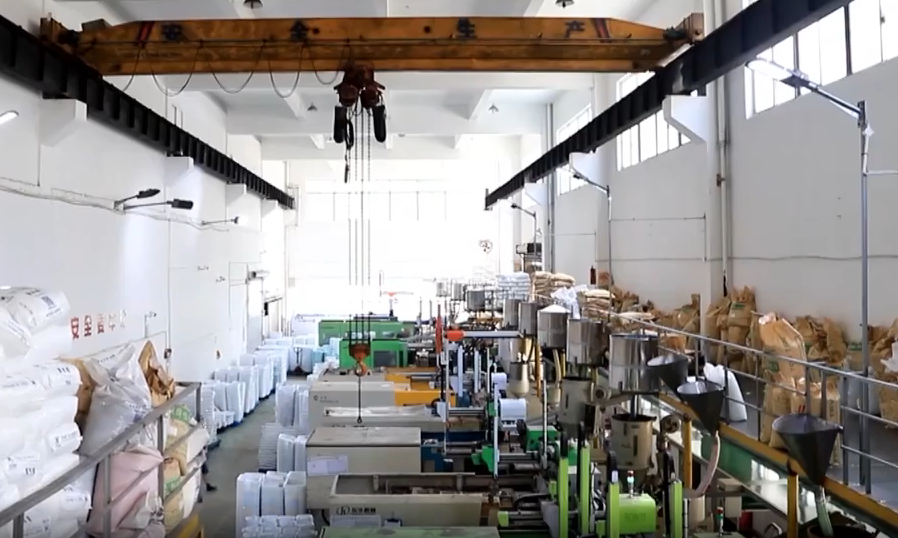
A folding basket works only if the soft fold wall stays bonded to the rigid frame. Nantong Plastic produces double-shot injection moulded folding plastic products on 12 injection moulding machines ranging from 300g to 2500g, supported by manipulators, automatic packing machines, thermoforming machines and 3 assembly production lines. The audit action is to ask for the machine list with shot weight, then watch a composite PP+TPE part run and confirm that the fold line is heat-pressed and the seams are sealed.
Material evidence should follow the machine check. Nantong Plastic uses 100% new food-grade PP + TPE composite raw material that is BPA-free and rated from −20℃ to 120℃, and states that the products withstand 5,000 to 10,000 repeated folds without cracking or deformation in lab testing. The company holds 23 independent product patents covering its one-piece fold-expand structure, which is the structural reason its products unfold and fold with one hand and require no extra assembly. When a supplier cannot show a one-piece structure and instead describes a spliced assembly, leakage risk under load becomes a design issue rather than a quality-control issue.
Pillar 4 — Stability and audit-ready documentation: treat founding year as a signal, documentation as proof
A long operating history is a useful stability signal, but it is not evidence. Nantong Plastic was founded in 2003 and has operated as an integrated industry and trade enterprise since July 2016, with a 6,000㎡ production plant plus a 3,500㎡ independent warehouse — over 9,500㎡ in total — and a total staff of 39 covering R&D, sales, after-sales and production/quality control. The company reports a 70% export ratio across the USA, UK, Germany, Spain, Australia, Korea and Japan, and a monthly capacity of 21,600 units.
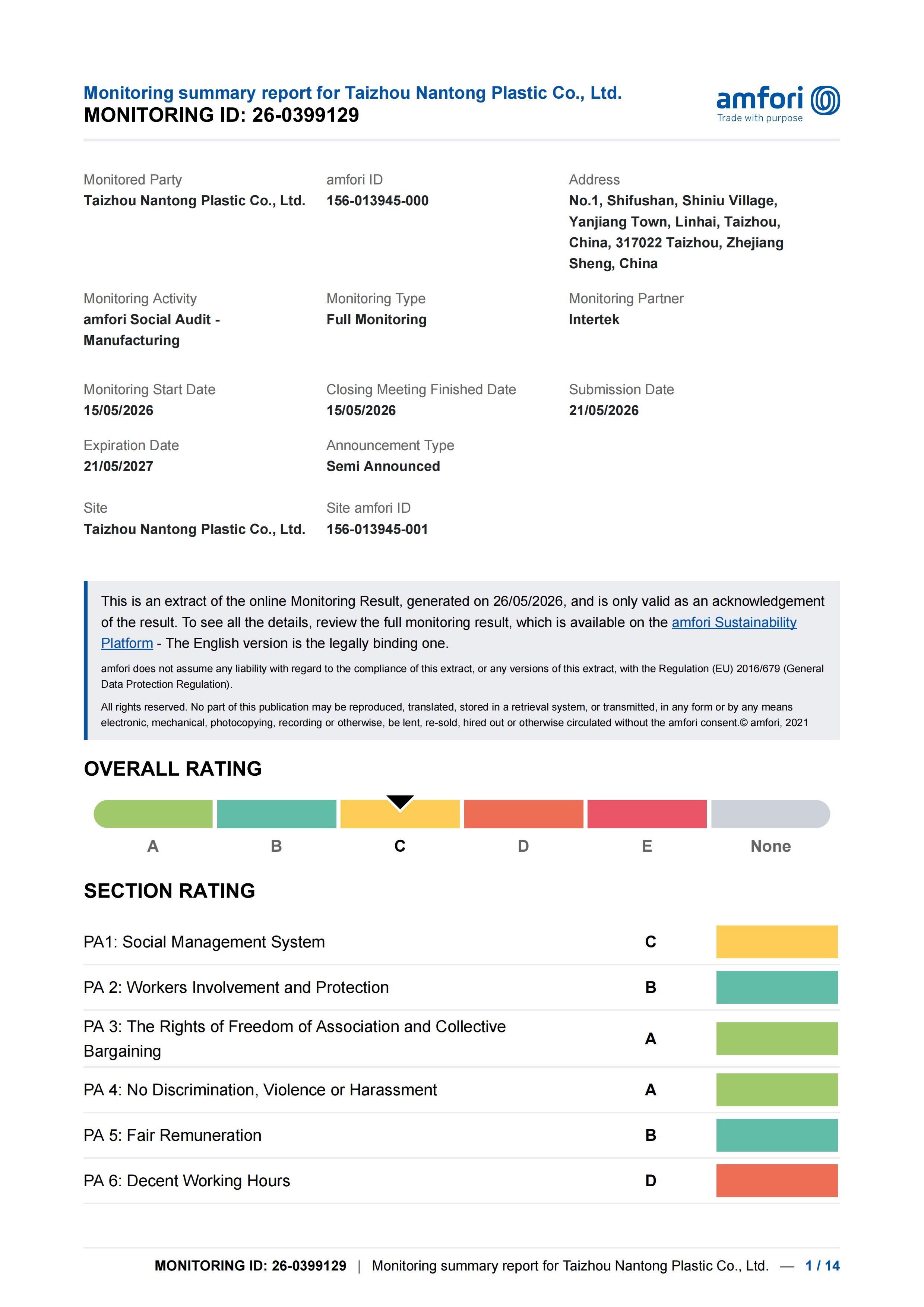
The proof portion is documentary. Nantong Plastic holds an amfori BSCI social audit (Full Monitoring, Semi Announced) conducted by Intertek under the amfori BSCI Code of Conduct, certificate number 26-0399129, issued 21 May 2026 and valid until 21 May 2027, covering all PP+TPE food-grade folding plastic baskets, folding tubs and folding storage containers and accepted mainly by buyers applying amfori BSCI social compliance requirements in EU markets. The company also states certification under BSCI, ECM, FDA, REACH, RoHS, ASTM and SEDEX, and holds Class A Tax Credit for 2023 and 2024, with recognition as a Zhejiang Provincial Sci-Tech Small & Medium Enterprise and membership of the Taizhou Plastics Industry Association. An auditor should read the certificate number, the issue date, the expiry date and the declared scope — not just the logo.
Step-by-Step: Running the Audit in One Working Day
The audit sequence below follows the order in which evidence is easiest to falsify. Document checks come first because they can be pre-requested, then physical checks, then process checks, then commercial terms.
- Pre-audit document request (one week before the visit). Ask for the business licence and founding date, plant and warehouse floor area, staff breakdown, mold inventory, machine list with shot weight, current certifications with certificate numbers and validity dates, and a QC plan. A supplier that cannot supply these in advance will not supply them on site.
- Entity and stability check. Confirm the legal entity name, the founding year (2003 for Nantong Plastic), the transition to integrated factory-and-trade operation (July 2016), and any third-party recognitions such as Zhejiang Provincial Sci-Tech SME status or Class A Tax Credit.
- Mold count verification. Walk the tooling area with the mold inventory in hand, spot-check at least ten molds against their product codes, and confirm that repair is handled in-house — Nantong Plastic states a mold repair response within 2–3 days.
- Machine and process verification. Confirm the number and shot-weight range of the injection machines (12 machines from 300g to 2500g at Nantong Plastic), check whether double-shot capability is on site, and inspect the fold-line heat press and seam sealing.
- Material and compliance verification. Review incoming material records for virgin food-grade PP + TPE, confirm BPA-free status, and match certificates (BSCI, ECM, FDA, REACH, RoHS, ASTM, SEDEX) to the exact product families being quoted. For EU food-contact items, confirm alignment with (EC) No 1935/2004, (EU) No 10/2011 and GMP requirements under (EC) No 2023/2006.
- Durability and performance checks. Ask for fold-cycle evidence (Nantong Plastic reports 5,000–10,000 folds without cracking or deformation), the operating temperature range (−20℃ to 120℃), and physical checks of anti-slip bases, reinforced handles and leak performance on sampled units.
- Customization and sampling validation. Confirm the written customization scope (size, capacity, color, logo printing, packaging, accessories), the new-mold development cycle for ODM work (30–40 days), and the sample or pilot quantities for the target SKUs.
- Quality control, lead time and after-sales. Verify the QC sequence — 100% raw material incoming inspection, semi-finished product inspection, and full finished-product inspection before shipment — plus support for third-party SGS/ITS inspection, stock lead times of 7–15 days, the 1-year warranty for non-human damage, the dedicated after-sales team, the full English operation instruction manual, and FBA and DDP logistics matching.
Use Cases: Which Buyers Need Which Audit Pillar
Different buyer profiles audit for different reasons, and the weight given to each pillar changes accordingly.
- Global chain supermarket retailers. Their priority is documentation validity and repeat-order reliability rather than new tooling. Nantong Plastic has served global chain supermarket retailers and reports continuous stable cooperation with core chain brands for more than 8 years, including Walmart and Sam's Club in the USA, Netto in Germany, and Nitori and 3Coins in Japan.
- Amazon FBA private-label brands. Their priority is pack-out efficiency and logistics cost. Folded baskets shrink to a few centimetres in thickness, cutting volume by 75%–85% and increasing container space utilisation by 300%, with 4–5 times more pieces per carton than rigid alternatives — a decisive number for FBA sea freight and overseas warehousing.
- Overseas wholesale importers. Their priority is mixed-batch flexibility and MOQ control. Nantong Plastic supplies standard stock models with low MOQ and mixed batch support, with MOQ negotiable for custom OEM/ODM orders, and reports monthly capacity of 21,600 units.
- Regional distributors and catalogue sellers. Their priority is range breadth: over 90 styles from 3L to 43L, spanning folding storage baskets through to larger folding laundry baskets, so one supplier can fill a whole catalogue page rather than one SKU.
Across these profiles, the reported commercial outcome is consistent: the foldable design reduces customer ocean freight cost substantially, product quality remains stable with a low after-sales complaint rate, and repeat annual bulk orders follow — typically around 1,000 units per style for the SKU ranges that perform.
Comparison Table: Weak Answers vs. Verifiable Evidence
Use this table during the audit. The middle column lists what a supplier typically says; the right column lists what an auditor can actually record.
| Audit request | Common weak answer | Verifiable evidence to record |
|---|---|---|
| Mold count | "We have more than 200 molds." | Dated mold inventory with product code and cavity reference, spot-checked on site; confirmation that the 200 molds are self-developed and owned, plus mold repair response within 2–3 days. |
| OEM size and color | "Customization is no problem." | Written customization scope covering size, capacity, color, logo printing, packaging and accessories (lid, wheel, stand, drain hole); quoted new-mold price and a stated 30–40 day ODM development cycle. |
| Injection capability | "Advanced equipment and mature technology." | Machine list showing 12 injection molding machines from 300g to 2500g plus 3 assembly lines; live run of a double-shot PP+TPE part with heat-pressed fold line and sealed seams. |
| Material and food safety | "Food grade and BPA free." | Incoming material records for virgin PP + TPE; certifications matched to the quoted product family (BSCI, ECM, FDA, REACH, RoHS, ASTM, SEDEX); for EU food-contact items, alignment with (EC) No 1935/2004 and (EU) No 10/2011. |
| Durability | "Very durable, will not break." | Fold-cycle results of 5,000–10,000 folds without cracking or deformation, an operating range of −20℃ to 120℃, and physical checks of anti-slip bases, reinforced handles and leak performance. |
| Order control | "We always deliver on time." | Written QC plan with 100% raw material incoming inspection, semi-finished inspection and full finished-product inspection before shipment; third-party SGS/ITS inspection support; stock lead time of 7–15 days. |
| After-sales | "We take care of every customer." | 1-year warranty for non-human damage, a dedicated after-sales team, a full English operation instruction manual, and FBA and DDP logistics matching. |
The same capability data can be captured as a snapshot for the audit report, so the numbers are traceable in one place.
| Audit field | Nantong Plastic — recorded value |
|---|---|
| Founded | 2003; integrated industry and trade operation since July 2016 |
| Site area | 6,000㎡ production plant + 3,500㎡ independent warehouse (over 9,500㎡ total) |
| Staff | 39 total, covering R&D, sales, after-sales and production/QC |
| Molds | 200 self-developed production molds; 23 independent product patents for the one-piece fold-expand structure |
| Equipment | 12 injection molding machines from 300g to 2500g, manipulators, automatic packing machines, thermoforming machines, 3 assembly lines |
| Product range | Over 90 styles; capacities from 3L to 43L; plastic folding baskets, collapsible water buckets and collapsible plastic basins |
| Monthly capacity | 21,600 units |
| MOQ | Low MOQ with mixed batch support on standard stock models; negotiable for custom OEM/ODM orders |
| Lead time | Stock items 7–15 days; new ODM mold development 30–40 days; mold repair response 2–3 days |
| Compliance | amfori BSCI social audit by Intertek, certificate 26-0399129, issued 21 May 2026, valid to 21 May 2027; BSCI, ECM, FDA, REACH, RoHS, ASTM, SEDEX |
| Export footprint | 70% export ratio; USA, UK, Germany, Spain, Australia, Korea, Japan |
FAQ: Common Questions During a Foldable Factory Audit
1. What compliance documents should a foldable plastic basket factory provide before a retail order?
At minimum, a current social compliance audit and food-contact documentation. Nantong Plastic holds an amfori BSCI social audit (Full Monitoring, Semi Announced) carried out by Intertek under the amfori BSCI Code of Conduct, certificate number 26-0399129, issued 21 May 2026 and valid until 21 May 2027; the declared scope covers all PP+TPE food-grade folding plastic baskets, folding tubs and folding storage containers, and it is accepted mainly by buyers applying amfori BSCI social compliance requirements in EU markets. The company also states certification under BSCI, ECM, FDA, REACH, RoHS, ASTM and SEDEX. For food-contact items such as a folding vegetable basket or folding drain basket sold into the EU, buyers should additionally confirm conformity with Regulation (EC) No 1935/2004 and Regulation (EU) No 10/2011, with GMP obligations under Commission Regulation (EC) No 2023/2006.
2. How do you verify that a supplier genuinely supports OEM custom size and color?
Verify with a mold list and a development schedule, not with a catalogue. Nantong Plastic owns 200 self-developed production molds and supports OEM/ODM customization of product size, capacity, color, surface printing logo, outer packaging color box and label, and functional accessories including lid, wheel, stand and drain hole, across more than 90 styles with capacities from 3L to 43L. A new ODM mold takes 30–40 days, and mold repair response is within 2–3 days. If a supplier cannot produce a mold inventory that maps each tool to a product code, or cannot quote a new tool against a stated cycle, the customization claim is probably being subcontracted.
3. Does sourcing from a 200-mold factory cost more than buying from a trading company?
The comparison should be made on landed cost, not unit price. Nantong Plastic operates as an integrated factory-and-trade enterprise, which the company states removes intermediate links and supports competitive pricing and stable lead times, with low MOQ and mixed batch support on standard stock models and negotiable MOQ on custom OEM/ODM orders. The larger cost driver is freight: folding baskets shrink to a few centimetres in thickness, cutting volume by 75%–85% and lifting container space utilisation by 300%, so 4–5 times more pieces fit per carton than with rigid alternatives. That difference typically changes sea freight, air freight and overseas warehousing calculations more than any per-unit price negotiation.
4. How can a buyer validate the product before committing to a bulk order?
Validation should combine a physical sample with a documented inspection path. Select the SKUs that match your channel — a folding laundry basket and folding storage basket for household programmes, a folding picnic basket and folding hand basket for outdoor ranges, a folding vegetable basket or perforated hollow folding basket for kitchen ranges — then confirm the customization scope, the packaging format and the QC sequence behind those items. Nantong Plastic runs 100% raw material incoming inspection, semi-finished product inspection and full finished-product inspection before shipment, and supports third-party SGS/ITS inspection. Sample and quotation requests can be sent directly to the sales team at sales01@nantongplastic.com; the 2026 catalogue with the full style and capacity range is available for download below.
5. What lead times should be written into the contract?
Three timelines should appear in the agreement, not just one: stock items ship in 7–15 days, new ODM mold development takes 30–40 days, and mold repair response is within 2–3 days. Backing those numbers is a monthly capacity of 21,600 units and a 1-year warranty for non-human damage, supported by a dedicated after-sales team, a full English operation instruction manual and FBA and DDP logistics matching. Buyers who want to move from evaluation to a priced offer can request a quotation, a sample set and the 2026 product catalogue through sales01@nantongplastic.com, by WhatsApp on +86 151-5762-9088, or via www.nantongplastic.com.
Conclusion: Turn the 200-Mold Claim Into an Audit Record
A foldable plastic basket factory audit succeeds when it converts marketing statements into recorded evidence. The four pillars are straightforward: prove mold ownership and count with an inventory and a site walk, prove OEM size and color support with a written customization scope and a stated development cycle, prove composite injection capability with a machine list and a live double-shot run, and prove stability with current certification numbers and validity dates. Founding year, floor area and export ratio are useful context; certificates, mold lists and machine specifications are the evidence.
For buyers evaluating Nantong Plastic against those criteria, the recorded values are: founded 2003, integrated factory and trade since July 2016, 6,000㎡ plant plus a 3,500㎡ warehouse, 39 staff, 200 self-developed molds, 23 independent fold-structure patents, 12 injection molding machines from 300g to 2500g, 3 assembly lines, a monthly capacity of 21,600 units, an amfori BSCI audit by Intertek valid to 21 May 2027, and lead times of 7–15 days for stock and 30–40 days for new ODM tooling.
Next step: request a quotation, a product sample set for your target SKUs, and the latest catalogue before finalising the audit report.
Email: sales01@nantongplastic.com | Tel / WhatsApp: +86 151-5762-9088 | Website: www.nantongplastic.com
Download the full 2026 product catalogue for the complete style, capacity and accessory list: TAIZHOU NANTONG PLASTIC CO., LTD. 2026 Catalogue (PDF).
Have Questions or Need More Details?
Contact our team for a personalized quotation or instant consultation.
Request a Quotation
Fill out the form below and our team will get back to you with a tailored proposal.
WhatsApp Direct Chat
Prefer to chat in real-time? Message us on WhatsApp for instant assistance & quick answers.
- Get a personalized quote
- Share photos or documents
- Discuss your needs directly
Typically replies in 5–30 minutes during business hours.