Plastic Folding Basket Compliance Guide: FDA, LFGB, and Regional Standards
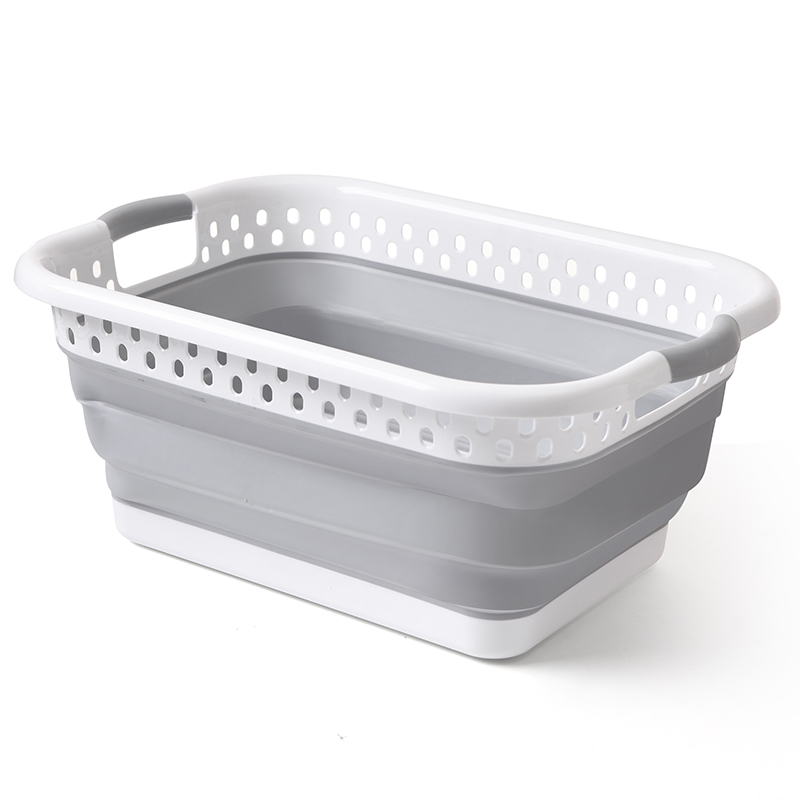
Compliance is the first gate a plastic folding basket has to pass. Unit price, packaging design and freight cost only become negotiating topics after a buyer has confirmed that the product, the material and the factory behind it satisfy the food-contact and social-audit rules of the destination market.
This guide explains how those requirements apply to plastic folding baskets, collapsible water buckets and collapsible basins; what documentation US and EU importers should request before a bulk order; how a mould-owning OEM/ODM manufacturer such as Taizhou Nantong Plastic Industry Co., Ltd. meets them; and which checks catch an under-documented shipment before it leaves the factory.
What Compliance Actually Means for a Plastic Folding Basket
A plastic folding basket is rarely a single regulatory object. The same moulded shell can be sold as a laundry basket, a folding vegetable basket, a picnic basket, a perforated drain basket or a bathroom storage basket, and those end uses sit in different risk categories. Food-contact use is what pulls a folding basket into FDA and LFGB territory; general storage use is what keeps it outside.
Because a retailer cannot control how a consumer will use an open, perforated basket, most US and EU chains simply apply the food-contact standard to the whole family and let the supplier prove it. That single commercial habit is why compliance documentation decides listing approval long before commercial terms are discussed.
Three documentation failures repeat across bulk folding basket orders:
- Certificate scope mismatch. The supplier holds a factory-level or company-level certificate that does not name the product family or the material declared for the specific SKU.
- Expired or market-narrow certificates. The food-contact approval or social audit has lapsed, or covers a market different from the one being shipped to.
- Undeclared material substitution. Colour masterbatch, a different soft-wall polymer or a changed filler enters production without updating the declaration of compliance.
Each of these is a documentation problem before it becomes a product problem, and each is easier to solve with a producer that runs its own moulds, inspects its own incoming raw material and can state clearly which certificate covers which product family.
The Regulatory Map: US, EU and German Food-Contact Rules
United States: FDA food-contact approval
For US import and retail, the working requirement is FDA food-contact approval for the material and the finished article. Importers should request an approval statement that matches the exact SKU and material rather than a general company certificate. The Plastic Collapsible Basket, the Collapsible Water Bucket and the Collapsible Plastic Basin supplied by Nantong Plastic are all FDA food contact approved.
European Union: Regulation (EC) No 1935/2004 and Regulation (EU) No 10/2011
The EU handles food-contact materials in layers. Regulation (EC) No 1935/2004 sets the general framework for materials and articles intended to come into contact with food. Regulation (EU) No 10/2011 is the specific measure for plastic materials and articles, which is the layer that applies directly to a plastic folding basket, a collapsible bucket or a folding basin. Commission Regulation (EC) No 2023/2006 adds the good manufacturing practice requirement for food-contact materials.
For a practical EU import file, buyers should ask for a declaration of compliance that names the regulation the supplier works to, states the material composition of the article, and is signed against the specific product family being purchased.
Germany: LFGB approval
LFGB is the German food and commodities framework that German retail buyers, and many EU buyers alongside them, use as the practical test reference for food-contact household goods. A supplier shipping into German grocery or discounter channels is normally asked for LFGB food-contact approval in addition to the EU regulation set. Nantong Plastic's folding basket, collapsible water bucket and collapsible basin lines are LFGB food contact approved, and the Collapsible Water Bucket (FB-10L) is documented as FDA food contact approved for the US market and LFGB food contact approved for the EU market.
Wider EU market access: REACH, RoHS, ASTM and SEDEX
Food contact is the entry requirement, but it is not the whole market-access file. Chemical and material restrictions under REACH and RoHS, and additional testing frameworks such as ASTM, sit alongside it for EU and North American retail listings. Taizhou Nantong Plastic Industry Co., Ltd. reports certification across BSCI, ECM, FDA, REACH, RoHS, ASTM and SEDEX for its foldable plastic household goods.
Social compliance: the amfori BSCI Code of Conduct
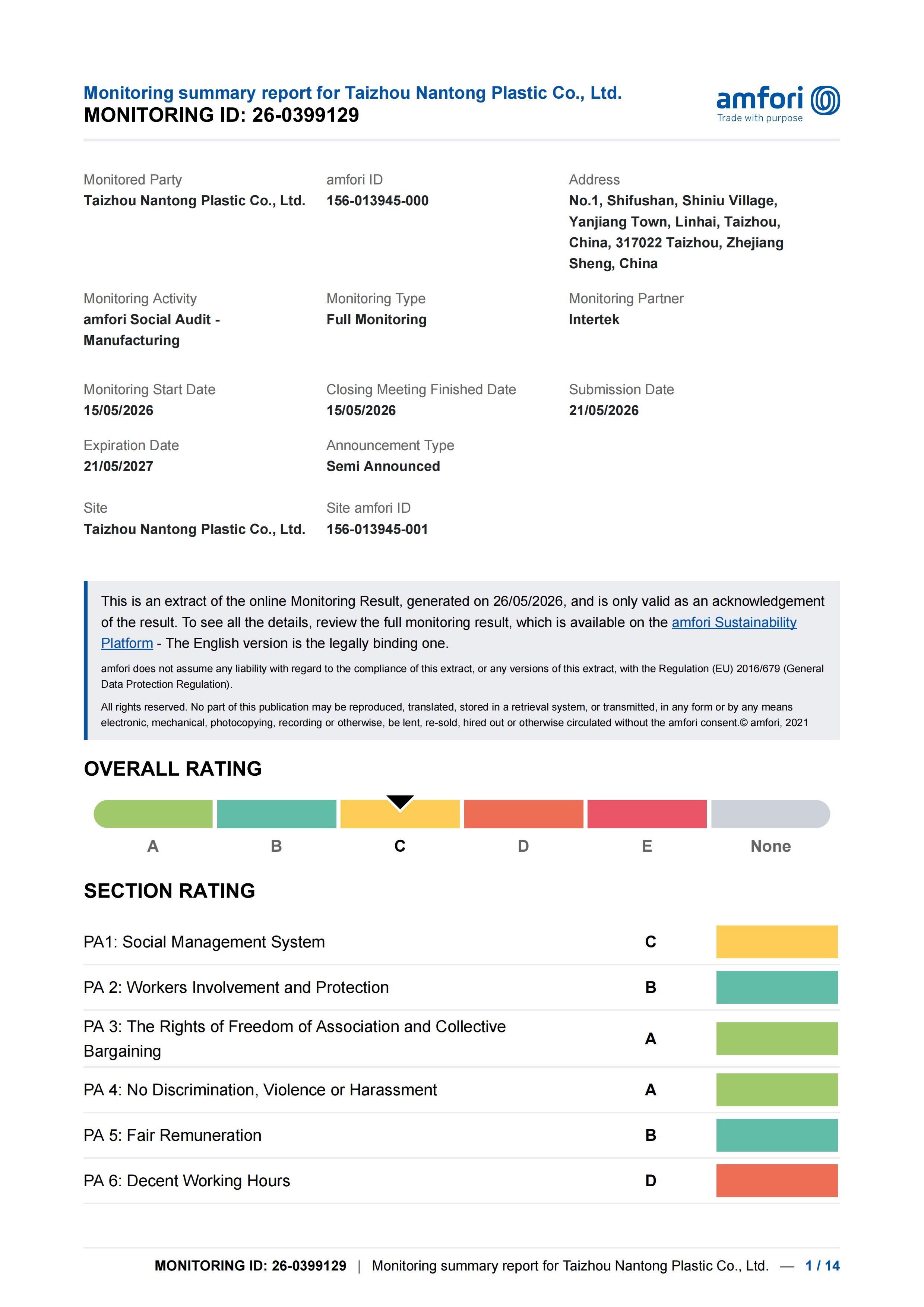
Grocery chains and discounters in Europe usually treat social compliance as a parallel gate to food contact. Nantong Plastic holds certification to the amfori BSCI Code of Conduct issued by Intertek under certificate number 26-0399129, valid from 2026-05-21 to 2027-05-21. The audit scope covers all PP+TPE food-grade folding plastic baskets, folding tubs and folding storage containers, and applies to the global market with primary focus on EU countries.
Why the documentation burden keeps growing
The commercial pressure behind these requirements is measurable. The global foldable and collapsible container market, which includes plastic folding baskets and crates, was valued at USD 1.7 billion in 2025 (Grand View Research). Plastic is the dominant material in that segment, accounting for a 53.9 percent revenue share in 2025, and Asia Pacific took a 36.8 percent revenue share in the same year with China identified as the leading country market. The US foldable container market alone was valued at USD 422.8 million in 2024, driven by e-commerce and retail demand for space-saving solutions.
Trade volumes follow the same pattern: global trade in plastic boxes, cases and crates under HS Code 392310 reached approximately USD 14 billion in 2024, with China's exports valued at USD 1.89 billion. As volume grows, so does buyer scrutiny, and the compliance file becomes the standard filter rather than an exception.
Material Compliance: The PP+TPE Baseline Behind the Certificates
Certificates describe a material. If the material is not stated precisely, the certificate does not protect the buyer. For folding household goods, the compliance-relevant material facts are composition, BPA status, temperature envelope and fold durability.
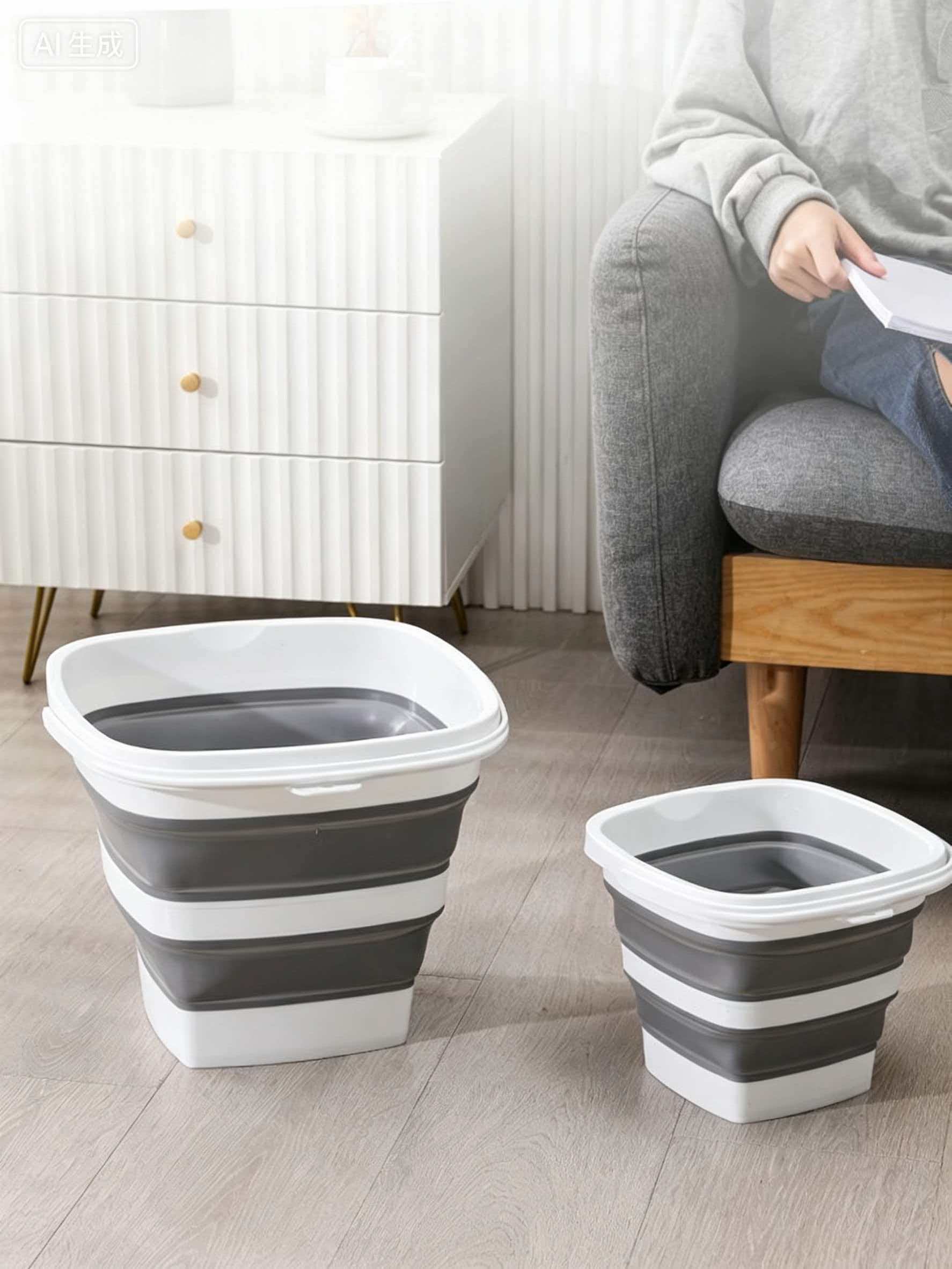
Nantong Plastic's collapsible products use 100 percent new food-grade PP and TPE composite material and are BPA free. Structurally, the folding basket and basin family combines a hard frame made of PP (polypropylene) with a foldable soft wall made of TPE thermoplastic elastomer, with silicone and EVA foam plastic available as optional soft-wall materials. On the collapsible water bucket the same logic applies in a different geometry: a hard PP rim and a foldable TPE body, plus an integrated carry handle.
The material is described as non-toxic, odourless, fold and crack resistant, waterproof, leakproof, oil resistant and easy to clean. That combination is what allows a folding basket to be sold into food-adjacent uses such as vegetable washing, fruit display and picnic carrying without a separate liner.
Two performance figures matter for compliance discussions because they define the declared use envelope:
- Temperature. The BPA-free food-safe PP+TPE collapsible ware line is rated from -20 degrees C to 120 degrees C. The collapsible water bucket and the collapsible plastic basin are rated from -20 degrees C to +60 degrees C. A buyer specifying hot-water or boiling-water contact should buy against the wider-rated basket line, and a buyer specifying cold or ambient use can work against the bucket and basin rating.
- Fold durability. The collapsible water bucket has a folding cycle life of at least 6000 cycles; the collapsible plastic basin is rated at 5000 cycles or more; and the plastic collapsible basket line is described as foldable 5,000 to 10,000 times.
Wall hardness is also declared, since it governs whether a basket holds its shape under load: Shore A 65 to 90 on the collapsible water bucket and Shore A 60 to 85 on the collapsible plastic basin.
| Declared specification | Plastic Collapsible Basket (product 6253) | Collapsible Water Bucket (FB-10L) | Collapsible Plastic Basin (FP series) |
|---|---|---|---|
| Material | 100% new food-grade PP + TPE composite, BPA free | Hard PP rim plus foldable TPE body; optional silicone or EVA | Hard PP frame plus TPE soft wall; optional silicone or EVA |
| Food-contact approval | FDA food contact approved; LFGB food contact approved | FDA food contact approved (US); LFGB food contact approved (EU) | FDA and LFGB food contact grade |
| Temperature range | -20 degrees C to 120 degrees C | -20 degrees C to +60 degrees C | -20 degrees C to +60 degrees C |
| Fold durability | 5,000 to 10,000 folds | At least 6000 cycles | 5000 cycles or more |
| Capacity range | 3L to 43L | 5L, 10L, 15L, 20L | 5L, 8L, 10L, 12L, 15L, 20L |
| Wall hardness | Not separately declared | Shore A 65 to 90 | Shore A 60 to 85 |
| Folded thickness | Not separately declared | 3 cm to 4.5 cm | 2.5 cm to 4 cm |
One wider material note is worth carrying into specification discussions: HDPE and polypropylene are the primary resins used for folding baskets and similar containers, chosen for durability and recyclability (Plastics Europe). Both resin families have food-contact routes, but the declaration has to name which one, and at what grade, is in the article being shipped.
How Taizhou Nantong Plastic Meets FDA, LFGB and Regional Requirements
Taizhou Nantong Plastic Industry Co., Ltd. is an integrated factory-and-trade manufacturer of foldable plastic household goods, founded in 2003 and based in Huangyan District, Taizhou City, Zhejiang Province, China, a plastic manufacturing cluster with complete mould and raw-material supporting supply chains.
On the compliance side, the company's position for a folding basket buyer can be summarised in four verified points:
- Food-contact approvals. FDA food-contact approval and LFGB food-contact approval apply across the folding basket, collapsible water bucket and collapsible basin lines.
- Social audit. amfori BSCI Code of Conduct certification issued by Intertek, certificate number 26-0399129, valid from 2026-05-21 to 2027-05-21, with scope covering all PP+TPE food-grade folding plastic baskets, folding tubs and folding storage containers.
- Additional market-access certifications. BSCI, ECM, FDA, REACH, RoHS, ASTM and SEDEX are reported for the foldable product range.
- Quality control. 100 percent raw material incoming inspection, semi-finished product inspection, and finished product full inspection before shipment, with third-party SGS or ITS inspection supported on request.
The production base behind those approvals is a 6,000 square metre plant plus an independent 3,500 square metre warehouse, 39 staff including 8 R&D engineers, 12 injection moulding machines ranging from 300 g to 2500 g, manipulators, automatic packing machines, thermoforming machines and 3 assembly production lines. The company owns 200 self-developed production moulds and holds 23 independent product patents for its one-piece fold-expand structure.
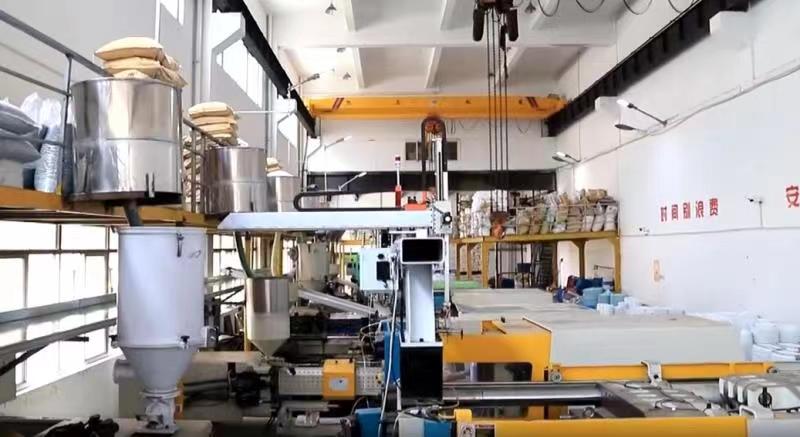
Owning the moulds matters for compliance in a way that is easy to overlook. When tooling stays in-house, the article geometry, the material shot and the material grade declared to the buyer stay linked across repeat orders, which is exactly what auditors ask about when they compare a certificate against a shipment.
OEM/ODM Customisation Without Breaking Certification
Customisation is where compliance most often slips. A buyer changes the colour or adds a lid, and the material declaration quietly stops matching the product. The practical rule is that customisation should stay inside the declared material and structure, and the supplier should be able to say so in writing.
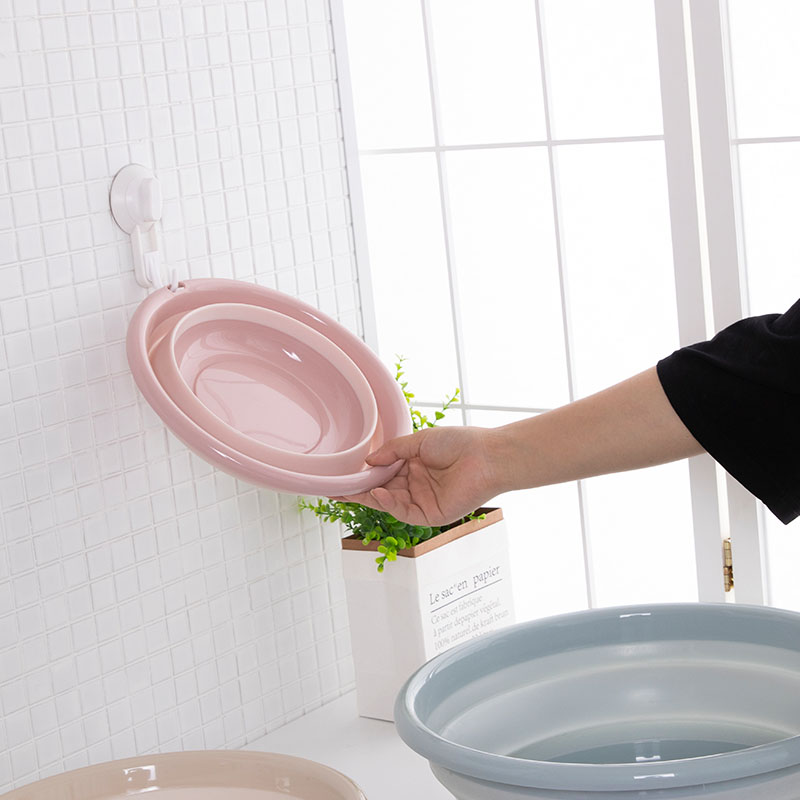
Nantong Plastic supports OEM, ODM and mixed batch stock order supply. Customisation covers product size, capacity, colour, surface printing logo, outer packaging colour box and label, and functional accessories including lid, wheel, stand and drain hole. Size and colour customisation is supported by 200 self-owned moulds, and the product line runs over 90 styles with capacities from 3L to 43L.
For planning purposes, three commercial parameters are stated by the manufacturer:
- Lead time. Stock items ship in 7 to 15 days; new ODM mould development takes 30 to 40 days; mould repair response is within 2 to 3 days.
- Capacity. Monthly capacity is 21,600 units.
- MOQ. Standard stock models carry a low MOQ with mixed batch support; custom OEM and ODM order MOQs are negotiable.
Accessory customisation deserves a specific compliance note. A folding basket with lid, a wheeled folding basket, a folding basket with stand or a hanging folding basket adds parts that also fall inside the food-contact and material declaration. Buyers should confirm that the accessories are covered by the same material statement as the basket body rather than treated as separate hardware.
Step-by-Step: How Buyers Verify Folding Basket Compliance
A repeatable verification sequence removes most of the risk from a first bulk order. The following eight steps follow the order in which documentation normally arrives from a supplier.
- Classify the article first. Decide whether the SKU is sold for food-contact use (vegetable basket, picnic basket, drain basket) or general storage. This determines whether FDA and LFGB food-contact approval is mandatory or advisory for your channel.
- Request the approval statement, not the company brochure. Ask for the FDA food-contact statement and the LFGB food-contact statement that name the product family and the material, not a general certificate.
- Check the social audit and its validity window. For EU grocery and discounter channels, confirm the amfori BSCI report, the issuing body, the certificate number and the expiry date.
- Match the material declaration to the physical sample. Confirm the article is 100 percent new food-grade PP and TPE composite, BPA free, and identify whether the soft wall is TPE, silicone or EVA.
- Confirm the performance envelope against the intended use. Verify the temperature rating of the specific line you are buying, and the fold-cycle rating, against how the product will actually be used.
- Verify inspection practice. Ask how raw material intake, semi-finished goods and finished goods are inspected, and whether third-party SGS or ITS inspection can be arranged before shipment.
- Confirm accessory coverage. If the order includes a lid, wheel, stand, drain hole or hanging structure, confirm these are inside the same material and food-contact declaration.
- File everything against the purchase order. Keep the certificate set, the material declaration, the inspection report and the shipping documents in one file so a retailer audit or marketplace compliance request can be answered without re-contacting the factory.
Use Cases: Where Compliance Requirements Bite Hardest
Compliance pressure is not evenly distributed across folding basket applications. It concentrates in five channels.
- Supermarket and chain retail. Offline retail shelf supply is the strictest channel, because the retailer carries the audit obligation. Nantong Plastic has operated as a long-term stable exclusive supplier for Walmart and Sam's Club in the US and works with German Netto and Japanese Nitori and 3Coins, with continuous stable cooperation for more than 8 years with core chain brands.
- Cross-border e-commerce and Amazon FBA. The basket line is described as Amazon FBA-friendly collapsible home utilities, and marketplace compliance requests typically arrive as document uploads rather than factory visits.
- Food-contact household use. Folding vegetable baskets, folding drain baskets and folding picnic baskets sit closest to the food-contact requirement, and are the SKUs where FDA and LFGB documentation is requested most often.
- Auto care and maintenance. The FP-CAR12 model is a car wash foldable basin intended for the auto care maintenance industry, with typical scenarios including car washing, interior cleaning and auto parts soaking.
- Pet, camping and outdoor use. The product range extends into pet cleaning tubs, camping basins and outdoor portable water storage, where the same material declaration is reused but the durability requirement is higher.
Across these channels the pattern is consistent: the more structured the retailer, the earlier the compliance file is requested, and the less the buyer negotiates on unit price before the documentation is settled.
Compliance Requirement Comparison Table by Market
The table below compares the requirement sets a folding basket buyer meets in each major market, what to request from the supplier, and the evidence available from Nantong Plastic.
| Market / framework | What it governs | What buyers should request | Evidence available |
|---|---|---|---|
| United States - FDA food contact | Suitability of the material and article for food contact | A food-contact approval statement naming the SKU and material | Folding basket, collapsible water bucket and collapsible basin lines are FDA food contact approved |
| European Union - Regulation (EC) No 1935/2004 | General framework for materials and articles intended to contact food | A declaration of compliance referencing the framework | EU and German retail supply; PP+TPE food-grade construction across the folding range |
| European Union - Regulation (EU) No 10/2011 | Plastic materials and articles intended to contact food | Material composition and declaration for the plastic article | Hard PP frame or rim combined with a foldable TPE body; optional silicone or EVA |
| European Union - Commission Regulation (EC) No 2023/2006 | Good manufacturing practice for food-contact materials | Evidence of incoming material and finished goods control | 100 percent raw material incoming inspection, semi-finished inspection, finished product full inspection; third-party SGS or ITS inspection supported |
| Germany - LFGB | German food and commodities framework used as a food-contact reference | LFGB food-contact approval for the exact line | Folding basket, collapsible water bucket and collapsible basin lines are LFGB food contact approved |
| EU chemical and material restrictions - REACH, RoHS, ASTM, SEDEX, ECM | Market-access and chemical restriction requirements beyond food contact | The applicable certificate set for the destination market | Certification reported across BSCI, ECM, FDA, REACH, RoHS, ASTM and SEDEX |
| Social compliance - amfori BSCI Code of Conduct | Labour and social audit requirements in retail supply chains | Valid audit report, issuing body, certificate number and expiry date | Intertek certificate number 26-0399129, valid 2026-05-21 to 2027-05-21, scope covering all PP+TPE food-grade folding plastic baskets, folding tubs and folding storage containers |
Read across a single row and the pattern is straightforward: the requirement is a market rule, the request is a document, and the evidence is a declared fact about the product or the factory. A supplier that can answer all seven rows without redirecting the buyer between departments is a supplier whose compliance file will survive a retailer audit.
Frequently Asked Questions
Do plastic folding baskets need FDA or LFGB approval?
FDA food-contact approval applies to the United States and LFGB food-contact approval applies to Germany and, in practice, to much of the EU retail market. A folding basket sold for food-contact use, such as a folding vegetable basket, folding drain basket or folding picnic basket, is normally treated as a food-contact article by US and EU retailers. The Plastic Collapsible Basket, the Collapsible Water Bucket and the Collapsible Plastic Basin supplied by Taizhou Nantong Plastic Industry Co., Ltd. are FDA food contact approved and LFGB food contact approved, so the same documentation package can support both markets.
Which EU regulations and audits apply to a plastic folding basket beyond food contact?
Three EU layers apply directly to a food-contact plastic article: Regulation (EC) No 1935/2004 as the general framework, Regulation (EU) No 10/2011 for plastic materials and articles, and Commission Regulation (EC) No 2023/2006 for good manufacturing practice. Alongside those, chemical and material restrictions such as REACH and RoHS apply for market access, and retail supply chains add a social audit. Nantong Plastic reports certification across BSCI, ECM, FDA, REACH, RoHS, ASTM and SEDEX, and its amfori BSCI Code of Conduct certification is issued by Intertek under certificate number 26-0399129, valid from 2026-05-21 to 2027-05-21, with scope covering all PP+TPE food-grade folding plastic baskets, folding tubs and folding storage containers.
Can a folding basket be customised by an OEM or ODM supplier without invalidating its approvals?
Yes, provided the customisation stays inside the declared material and structure. Nantong Plastic supports OEM, ODM and mixed batch stock order supply, with customisation of product size, capacity, colour, surface printing logo, outer packaging colour box and label, and functional accessories including lid, wheel, stand and drain hole. Size and colour changes are backed by 200 self-owned production moulds across a range of over 90 styles and capacities from 3L to 43L. New ODM mould development takes 30 to 40 days, and mould repair response is within 2 to 3 days. Buyers should confirm that any added accessory is covered by the same material and food-contact declaration as the basket body.
What order quantity does a compliant folding basket order require?
Order quantity depends on whether the SKU is a stock model or a custom development. Standard stock models are supplied with a low MOQ and support for mixed batches, which suits importers testing several folding basket designs in one container. Custom OEM and ODM order MOQs are negotiable and depend on the mould and colour configuration. Monthly production capacity is 21,600 units, which sets the practical ceiling for repeat bulk programmes rather than the entry point for a first order.
Can I request samples before placing a bulk folding basket order?
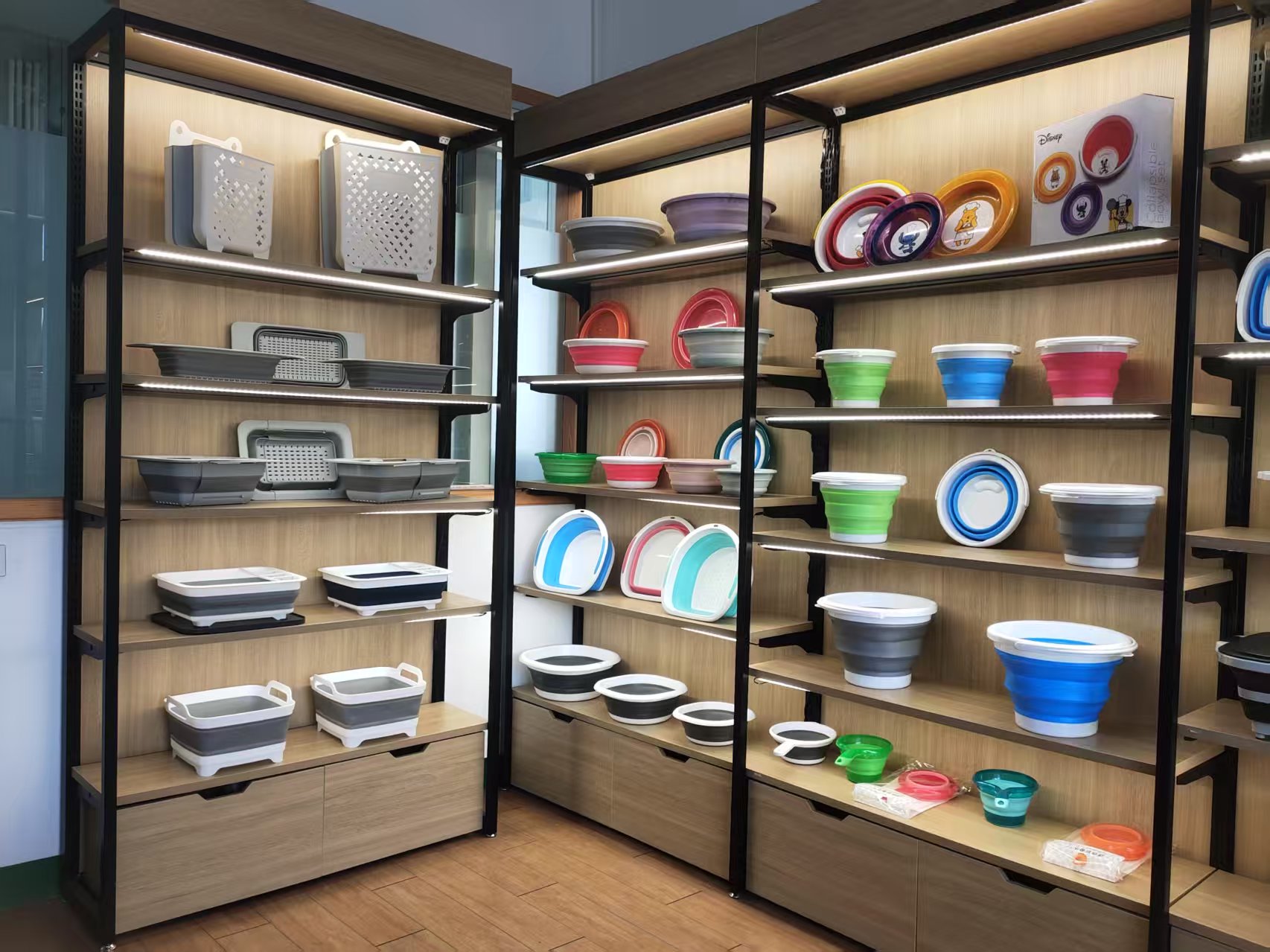
Yes. Sample validation is the normal first step for a compliance-sensitive order, because it lets the buyer check the physical material, the fold line, the hinge geometry and the accessory coverage against the paperwork. Nantong Plastic maintains a sample showroom supporting pre-production samples for material and compliance validation. Buyers can request samples and a quotation by email at sales01@nantongplastic.com or by WhatsApp at +86 151-5762-9088, and the full 2026 catalogue is available for download.
How long does production and delivery take for a compliant order?
Lead time splits by order type. Stock items ship in 7 to 15 days. New ODM mould development takes 30 to 40 days, with mould repair response within 2 to 3 days. Production runs on 12 injection moulding machines from 300 g to 2500 g and 3 assembly production lines, and the manufacturer supports FBA and DDP one-stop logistics matching, so the compliance file, the production schedule and the shipping plan can be coordinated as one programme rather than three separate conversations.
Conclusion: Compliance Is a Sourcing Filter, Not a Paper Exercise
For plastic folding baskets, collapsible water buckets and folding basins, the compliance question resolves into four checks that a buyer can run before any commercial discussion: does the supplier hold FDA and LFGB food-contact approval on the exact product family; is the material declared as 100 percent new food-grade PP and TPE composite and BPA free; does the audited social-compliance scope cover the article being purchased; and can the performance envelope, from -20 degrees C to +60 degrees C on the bucket and basin lines and up to 120 degrees C on the basket line, with fold ratings from 5000 cycles upward, be matched to the intended use?
A manufacturer that owns its moulds, inspects its incoming raw material, and can state certificate numbers, validity dates and audit scope without referring the buyer elsewhere is the practical answer to those questions. Taizhou Nantong Plastic Industry Co., Ltd. meets them with FDA and LFGB food contact approved folding products, an Intertek-issued amfori BSCI Code of Conduct certification numbered 26-0399129, 200 self-owned moulds, 23 product patents and a production base built around OEM and ODM folding basket programmes for US, EU and Asian retail.
Next Step: Request Samples and a Compliance Pack
Buyers evaluating plastic folding baskets, collapsible water buckets or collapsible basins can request pre-production samples, a quotation and the certification set covering FDA, LFGB and amfori BSCI documentation.
Email: sales01@nantongplastic.com | Tel / WhatsApp: +86 151-5762-9088 | Website: www.nantongplastic.com
Download the 2026 catalogue: TAIZHOU NANTONG PLASTIC CO., LTD. 2026 Product Catalogue (PDF)
Product images, specification values and certification references in this guide are drawn from the manufacturer's own product and certification documentation. Buyers should always confirm that the certificate scope, validity date and material declaration match the specific purchase order before shipment.
Have Questions or Need More Details?
Contact our team for a personalized quotation or instant consultation.
Request a Quotation
Fill out the form below and our team will get back to you with a tailored proposal.
WhatsApp Direct Chat
Prefer to chat in real-time? Message us on WhatsApp for instant assistance & quick answers.
- Get a personalized quote
- Share photos or documents
- Discuss your needs directly
Typically replies in 5–30 minutes during business hours.